
Information Flow
Introduction to Information Flow
What is Information Flow?
Information Flow represents the process by which press releases, economic reports, and media articles move from source to investors for analysis, interpretation, and classification. With thousands of media items, regulatory filings, and macroeconomic updates circulating per second, the sheer volume of data has outpaced human cognitive limits. Consequently, analysts typically spend 30 minutes to 2 hours a day processing this information to determine the overall market mood while developing a data-driven narrative behind a corporate event or sector trend. Even when leveraging first-generation automated scrapers, analysts face a secondary bottleneck: spending hours manually filtering noise, verifying sources, and reconciling conflicting headlines before a single trade can be made.
How is the Information Utilized?
Once information is flowing efficiently through a firm, it can be leveraged across the investment lifecycle both internally and externally.
Internally, firms may utilize this information for: Reputation Management - monitoring how news outlets and social media influencers view their brand; Competitive Intelligence - monitoring the performance of their competitors' products and services, marketing efforts, and market trends; and Crisis Management - monitoring potential operational challenges due to social unrest, regulation changes, natural disasters, and organized crime.
Externally, analysts will tap into this information for Financial Analysis - monitoring the performance of existing investments, identifying new investment opportunities, anticipating and mitigating potential portfolio risks, hedging against events, and uncovering trends - and Sentiment Analysis - determining the best way to score and label the tone expressed in the headline and body of the text to serve as an input for data-driven investment decisions.
Harnessing the Information Flow
How is the Information Flow Harnessed?
To truly appreciate how technological advancements have revolutionized the finance industry, we have to start our journey in the "Paper Boy" era and make our way through history to the Generative era.
For about a century, from the late 1800s to the late 1900s, information traveled via physical mail, early telegraphs, or ticker tape. Analysts marked up pages with highlighters, maintained physical filing cabinets of clippings, and manually calculated how news might impact a balance sheet over weeks or months. Then in 1982 the Bloomberg Terminal finally comes online bringing news data feeds to desktop screens following closely behind the Reuter Monitor Dealing service which carried news and prices covering securities, commodities and money across the globe. "Analytics" at this time took the form of simple software scripts that looked for financial buzzwords like - Bankruptcy, Merger or Resignation - without the context of the surrounding text. These systems regularly triggered panic among investors due to clickbait headlines like, "This Is Exactly How the US Government Goes Bankrupt (And How To Protect Your Wealth Now)."
As the analytical process improved in the early 2000s, quantitative funds started utilizing lexicon-based processing and basic machine learning techniques. This allowed them to graduate from keyword-search classification. They were now able to strip text into a "bag of words" and mathematically output a sentiment score between -1 (highly negative) and +1 (highly positive) to fuel their high-frequency trading models.
As we enter the generative AI and deep learning era, systems transitioned from lexicon-based processing and dictionary lookups to financial Large Language Models. Today's financial systems don't just look for keywords; they understand nuanced context, sarcasm, double negatives, and systemic implications. Our Agentic Analysts proactively read macroeconomic news flow, compare it against historical price data, synthesize corporate transcripts, and execute nuanced multi-asset strategies entirely devoid of human intervention.
However, a critical gap remained between cognitive understanding and operational execution. While modern LLMs can summarize earnings transcripts or categorize news sentiment, they lack the agency to run continuously, coordinate complex multi-step workflows, or calibrate their qualitative findings against quantitative market realities (such as sector beta sensitivities and historical macroeconomic surprise metrics). This divide between "reading the news" and "systematically acting on it in real time" defined the next frontier—the transition from passive LLM copilots to fully autonomous, mathematically calibrated market intelligence networks.
For a timeline showing how Natural Language Processing (NLP) has evolved in the financial industry, we pulled some data directly from MIT's paper, "From ELIZA to ChatGPT: The Evolution of NLP and Financial Applications". Check it out below.
Timeline from Statistical to Agentic
1. The Early/Statistical Era (1980s – 1990s)
- 1984 (First Recorded Financial NLP Use): Frazier, Ingram, and Tennyson introduced a statistical methodology to evaluate narrative data in accounting reports.
- 1996: Brachman et al. applied data mining techniques to analyze corporate databases.
- 1998 (Early Web Data): Wuthrich et al. performed stock market forecasting by analyzing textual web data.
2. The Lexicon & Embedding Era (2000s – 2010s)
- 2007 (Web Sentiment): Das and Chen developed a sentiment extraction method from small talk/text on the web for stock price predictions.
- 2008 (Bag of Words): Tetlock, Saar-Tsechansky, and Macskassy utilized bag-of-words classification to quantify language and measure firm fundamentals.
- 2010 (IPO Prospectuses): Hanley and Hoberg performed word content analysis of IPO prospectuses to assist underwriters in pricing.
- 2010 onward (Data Explosion): The rise of social media and exponential growth in compute power spurred widespread financial industry interest in textual data mining.
- 2011 (Domain-Specific Lexicons & Event Risk):
- Loughran and McDonald developed a highly popular financial lexicon specifically for sentiment analysis in accounting and 10-K filings.
- Healy and Lo conducted language analysis to identify event risk.
- 2013: Si et al. exploited topic-based Twitter sentiment for stock predictions using mixture models.
- 2014: Malo et al. introduced the Financial Phrasebank to detect semantic orientations in economic texts.
- 2015 (Fraud Detection): Purda and Skillicorn introduced a domain-specific dictionary for predicting fraud in 10-K documents.
- 2016 (Compliance, Industry Classification, & FOMC Sentiment):
- Zhang and El-Gohary developed an NLP-based automated compliance checking system.
- Hoberg and Phillips used NLP to classify industries and identify firm interconnections.
- Azar and Lo analyzed Twitter feeds to predict stock market reactions to FOMC meetings.
- 2018 (Risk Factor Analysis & Wall Street AI Adoption):
- Buehlmaier and Whited developed a textual analysis method to identify financial risk factors.
- Agrawal et al. studied intraday return event correlations with Stocktwits and Twitter sentiments.
- S&P Global acquired Kensho (an AI analytics provider) to automate manual data analysis.
- 2019 (Lexicon Finetuning & ESG):
- Ke, Kelly, and Xiu developed a lexicon specifically optimized for generating sentiment scores to predict returns.
- Kumar et al. applied dictionary-based NLP to identify thematic ESG exposure for impact investing.
3. The Deep Learning & Large Language Model Era (2020s – Present)
- 2020 (Introduction of finBERT & Greenwashing Detection):
- Huang, Wang, and Yang released finBERT, a specialized BERT transformer model pre-trained on financial text that set state-of-the-art results for financial sentiment tasks.
- Cojoianu et al. used AI models to detect corporate greenwashing by fact-checking sustainable activity claims.
- 2021 (Climate Risk Analysis): Webersinke et al. developed climateBERT to detect climate context and fact-check climate risk claims.
- 2022 (Transcribing Earnings Calls & Cryptocurrencies):
- Kantos et al. compared dictionary-based models with finBERT to predict sentiment from earnings call transcripts.
- Zou and Herremans used finBERT on Twitter data to predict extreme price movements of Bitcoin.
- 2023 (LLMs as Partners): Authors Andrew Lo and Manish Singh co-authored the paper alongside OpenAI's ChatGPT, showcasing LLMs transitioning from analytical tools to generative partners.

Market Intelligence
Introduction
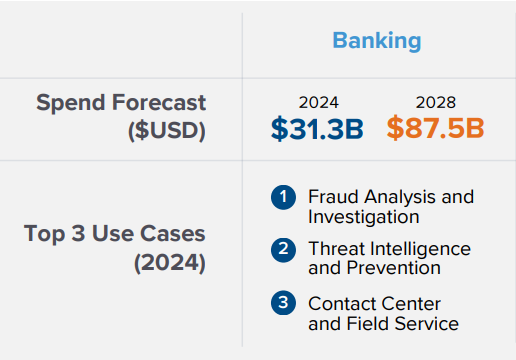
For the last 40 years, the financial services industry has been at the very center of technological innovation, often leading the charge in an effort to secure alpha over competitors before the trade is crowded and the spread decays. In high-frequency and quantitative environments, this means capturing market signals before competitors catch up, execute similar trades, and eliminate the premium. Since the 2000s, this has included establishing algorithmic trading firms and global market scanners, leading to financial institutions becoming the top enterprise spenders outside of technology—with $31.3 billion allocated to AI in 2024—and leading enterprise adoption by spending heavily on predictive algorithms, fraud detection, and risk management.
Predictive Algorithms
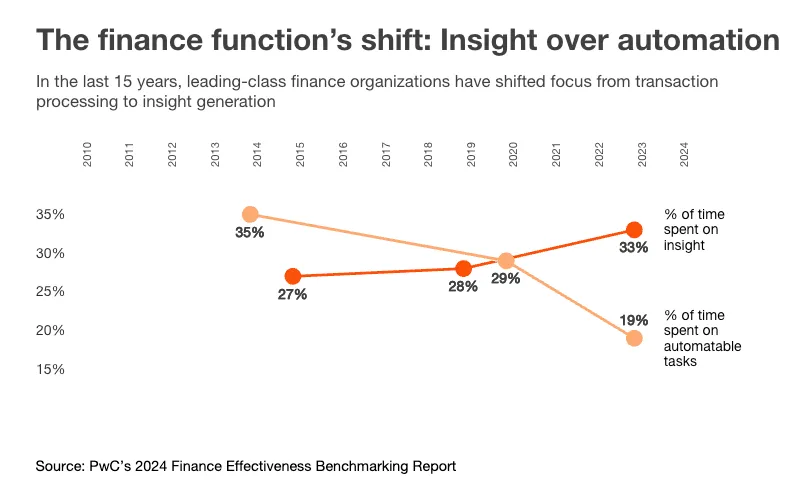
The transition from traditional statistical models to agentic, cognitive architectures has opened a new frontier in market prediction and alpha generation. Historically, financial analysts spent hours manually searching databases and news feeds to predict market moves. Today, agentic systems act as autonomous research partners—ingesting massive multi-source datasets, identifying non-obvious correlations, and generating real-time predictive insights with speed that human analysts cannot match.
According to Moody's research on the rise of agentic AI in financial services, "Research Assistant users consume 60% more research while cutting task completion times by 30%. More significantly, over 90% of AI interactions are now focused on high-value analytics, reflecting a structural transformation in financial workflows." This has completely flipped the script, allowing investment firms to autonomously monitor markets, detect correlations, and optimize allocations. Due to reinforcement learning from human feedback (RLHF) loops and ever-growing datasets, the benefits to financial systems do not stop there. Financial systems now possess the ability to 'better anticipate liquidity risks, geopolitical disruptions, and market shocks, strengthening financial resilience in volatile environments.'
Fraud Detection
Automation is a powerful tool, not just for predictive analytics, but also pattern recognition. Securing the perimeter of modern financial institutions requires continuous, real-time transaction screening and identity verification. Legacy rule-based fraud detection systems are notoriously brittle, generating high rates of false positives that overwhelm compliance teams. Agentic AI addresses this bottleneck by parsing natural language patterns, cross-referencing global database entities, and identifying complex, multi-layered financial crimes in milliseconds.
Even before the agentic era took hold in the financial world, many banks across the globe noticed immediate success in the realm of fraud detection. According to Deloitte's 2024 report, a leading UK-based bank attributed its success in fraud detection to generative technologies cutting account opening fraud by 90% since 2019. This is due to the technology's inherent ability to see patterns, allowing it to be the best scout in terms of noticing activity that is out of the ordinary. "Sardine reports that at one financial institution, Know Your Customer (KYC) workflows resolution rates exceeded 98% on average. For more complex tasks, such as sanctions screening or negative news reviews, resolution rates were closer to 55%," according to Neurons Lab.
Outside of detecting and resolving fraud, one gap still remains throughout the entire process: conducting thorough investigations. According to Neurons Lab research, "EY found that when used for manual time intensive Anti-Money Laundering (AML) investigations, agentic AI led to a 50% time reduction per investigation or a saving of two hours of human labor per case." Less time spent investigating means that human resources can now direct their time to improving operational efficiency.
Ultimately, the transition from brittle, rule-based systems to intelligent, Agentic AI marks a critical evolution for financial security. By eliminating mundane tasks and reducing false positives, financial institutions can redirect human capital toward strategic growth, operational excellence, and adapting to emerging threats.
Risk Management
Risk management is no longer a backward-looking compliance exercise; it has become an active, real-time portfolio shield. Instead of waiting for weekly or monthly portfolio reports, firms are leveraging agentic workflows to continuously run credit evaluations, shock portfolios against macroeconomic events, and adjust exposure boundaries dynamically.
The opportunities to embed agentic systems into risk management procedures are ever-growing across the industry. According to a McKinsey report presented by Neurons Lab, putting agentic systems into production enables zero-touch operations while "reducing manual workloads by 30% to 50%." In the retail banking space, the biggest opportunity to introduce zero-touch operations comes from credit risk assessment. Credit risk assessments traditionally involve hours of human effort verifying debts and creditworthiness. With AI agents, controlling for systematic issues revolving around socioeconomic status, real-time evaluation of borrower solvency has become a reality. Though we are in the preliminary stages of this technology, as RLHF loops allow humans to integrate qualitative contextual reasoning through the introduction of specialized edge-case datasets, agentic systems will continuously refine and improve their predictions. Crucially, institutional risk management demands more than qualitative alignment; it requires strict mathematical determinism, auditability, and validation frameworks to ensure autonomous agents operate within defined risk tolerances and regulatory boundaries.
As the industry works to integrate advanced qualitative reasoning into agentic models through human-in-the-loop reinforcement, we can focus on the immediate benefits to modern banking systems. In the near term, the focus remains on deploying deterministic guardrails—such as an Intent Governor—to validate outputs, prevent model drift, and ensure compliance without sacrificing execution speed. An example provided by McKinsey shows "a 20% to 60% increase in productivity and a 30% improvement in credit turnaround" just by turning credit risk memo generation into an agentic process.
Applied Sentiment Analysis
| Opportunity Area | Core Metric / Action | Time / Efficiency Impact | Source |
|---|---|---|---|
| Predictive Algorithms | Analytical Task Completion | 30% reduction in time | Moody's |
| Predictive Algorithms | Client Onboarding / Profiling | Reduced from months to seconds | Deloitte |
| Fraud Detection | Account Opening Fraud | 90% reduction | Deloitte |
| Fraud Detection | AML Investigation Duration | 50% time reduction (2 hours saved/case) | EY |
| Risk Management | Credit Memo Turnaround | 30% improvement | McKinsey |
| Risk Management | Credit Risk Memo Workload | 20% - 60% productivity gain | McKinsey |
The results are real. Financial practitioners are experiencing operational efficiency and time gains across all major opportunity areas. The optimal entry point to unite these capabilities lies at the intersection of predictive analytics and risk management: real-time news sentiment analysis. Because global media and economic alerts act as the earliest leading indicators of market shifts, programmatically tracking and calibrating sentiment trends across 500+ constituents allows firms to preemptively hedge risk before it manifests in price drawdowns. This makes news analytics the ideal sandbox to build a reusable, cloud-native agentic stack. As the technologies emerge, Partna Studio's approach is to open-source intelligence. As large language models have advanced, our studio saw an opportunity to further enhance news analytics, reduce rogue operations, and position a market intelligence platform at the forefront of agentic AI adoption—moving beyond a simple agentic workflow to a dynamic, rule-based system that delivers traceable, high-value results at scale, spanning 500+ entities autonomously.
Sentinel has already applied fine-tuned models and specialized tools in its internal processes, including utilizing FinBERT and few-shot prompting. Building on that experience, the next logical step was to extend AI-enabled analysis to governance and compliance—expanding agentic capabilities to resolve trust and reliability issues throughout the decision-making processes. By making sentiment analysis one of the front-runner domains to fundamentally reimagine end to end, Partna Studio aims to gain insights that it can apply as it deploys agentic AI and evolves Sentinel's market intelligence capabilities more broadly.
News Analytics was the first domain for Sentinel to start solving with its agentic capabilities, serving as a proof point for how agentic systems can reimagine other opportunity areas to build an AI-native infrastructure. Partna Studio made the deliberate choice to build a reusable technology stack and open-source development capabilities to accelerate worldwide adoption.

Market Intelligence Engine
Establishing the Sentinel Framework
Whilst researching the history of algorithmic trading and NLP processing, the team analyzed the largest opportunities areas in which to utilize large language models to open-source market intelligence. Many firms, from Citadel Securities to Jane Street, have built nationally known trading operations by processing market intelligence data feeds provided by major retailers like Reuters and Bloomberg, building proprietary data models that power trading strategies to generate massive profits over the last several decades. The market intelligence platforms that power these firms from the Bloomberg terminal to AlphaSense have notably been shrouded in secrecy where investors are unable to peek under the hood and see how the data is aggregated, how sentiment is calculated and why a particular buy or sell signal is generated and pushed to their dashboard.
Though we have seen some advancement in recent years around open-source technology with AI4Finance releasing FinBERT—a fine-tuned LLM for building agentic trading systems that effectively process financial documents—the interactions are limited to single-agent text summaries of regulatory filings. With the rise of agentic systems, Partna is hoping to take the foundational models created by FinBERT and shift the open-source community toward developing multi-layer analytical engines. Sentinel's engine specializes in coordinating top-down macro indicators and bottom-up micro sentiment.
As shown in the System Architecture Diagram, Sentinel accomplishes its mission by implementing a multi-agent system that includes two role-based agents—the Chief Macro Economist and the Senior Sentiment Analyst—that feed data to a centralized governor—the IntentCore Compliance Gateway—before determining when to push the data back to the user or raise a flag for further review.
-
The Chief Macro Economist (CMO) is an executive macro analyst agent that monitors economic releases. It orchestrates its sub-agents (Forex Factory Scraper and Alpha Vantage Agent) to ingest real-time and historical macroeconomic conditions, maps economic indicator surprise deviations relative to rolling standard deviations, and produces a structured surprise tensor report () representing broader macroeconomic shocks.
-
The Senior Sentiment Analyst (CIO) is an executive-level consolidation and mathematical aggregation agent. It ingests news feeds scored by downstream sentiment scraper pipelines alongside qualitative signals (like corporate tension indicators and 10-K textual inertia metrics). It distinguishes between index/ETF portfolios and individual equities, normalizes constituent weights, aggregates portfolio sentiment math, and outputs a structured sentiment profile report.
-
The Intent Governor is a stateless FastAPI guardrail/validation gateway node that acts as an institutional circuit breaker. It monitors execution states prior to portfolio allocation adjustments to ensure compliance with a strict 15% turnover/drift limit, flags empty news payloads, and isolates rogue allocations. Depending on execution modes:
- Heartbeat Mode (Autonomous): Gracefully falls back to baseline weights and documents a warning report to avoid pipeline blockages.
- Reflex Mode (Interactive Webhooks): Halts pipeline execution with a
NodeInterrupterror, queuing the transaction until a manual human override is approved.
Building the Technical Foundation
Introduction
To transition from manual news analysis to a fully autonomous, institutional-grade execution engine, Sentinel requires more than simple text-comprehension capabilities. It needs a rigid, mathematically sound framework that translates qualitative textual sentiment into quantitative market signals. A platform built on unstructured, erratic LLM outputs will inevitably fail when faced with high-frequency market adjustments. To prevent this, our technical foundation is anchored in three core pillars: deterministic mathematical calibration, structured prompting standards, and an optimized, high-dimensional storage layer.
Macro Surprise Calculation
Macroeconomic shocks are normalized into standardized surprise scalars representing deviations from expectations:
- : Event tier weight (Red = , Orange = , Yellow = ).
- : Released statistical figure.
- : Median forecast consensus prior to release.
- : Rolling 5-year standard deviation of expectations for this specific indicator.
Effective Shocked and Confidence-Weighted Sentiment
Incorporates macro shocks dynamically based on sector-level sensitivities:
- : Confidence-weighted average of Llama-3-Finance sentiment scores over the last 24 hours:
- : Historical beta coefficient of asset to macro event category .
Reinforcement Learning Reward Function
Maximizes Information Ratio while penalizing turnover and slippage:
- : Turnover penalty coefficient scaled between 5 and 15 at initialization.
- : Volatility-scaled slippage sensitivity coefficient.
- : Projected transaction slippage penalty based on order book volume.
Prompt Engineering Standards: The CARE Framework
To guarantee that our LLMs behave as deterministic, machine-readable analysts rather than conversational chatbots, we implement the CARE prompting framework (Context, Ask, Rules, Examples).
- Context (
C) defines the agent's specific role, access constraints, and market parameters. - Ask (
A) outlines the strict, step-by-step instructions for data ingestion and calculation. - Rules (
R) establish negative constraints, forcing the agent to output a single, valid JSON block with zero preamble or conversational fluff. It also enforces a strict self-correction rule: the agent must populate a"reasoning_summary"key first to map out its logic before generating final numerical scores. - Examples (
E) utilize few-shot calibration to anchor the model's accuracy.
Furthermore, we utilize a decoupled prompt and schema architecture. Rather than hardcoding JSON output formats or calibration examples inside our system prompt text files, we load them dynamically from separate JSON files at runtime. This prevents prompt bloat, enables cleaner IDE syntax linting, and completely bypasses Python's brace-escaping errors during template formatting.
Storage Layer & High-Dimensional Vector Caching
Maintaining a real-time, 500+ entity pipeline requires an optimized database architecture capable of handling both high-dimensional vectors and rapid state checkpoints. Sentinel solves this by employing a hybrid storage layer:
-
MongoDB Atlas: Serves as our primary database, split into two functional clusters. The
sentinel_dbmanages application state, scored articles, and leaderboards, whilecheckpointing_dbarchives LangGraph thread checkpoints to support autonomous self-healing and recovery loops. -
FAISS Vector Database: Built using high-dimensional NVIDIA Embeddings, FAISS acts as our local semantic cache. By storing a massive calibration dataset (
calibration_embeddingsconsumes ~98% of Sentinel’s current database footprint), FAISS performs nearest-neighbor semantic searches on incoming headlines. This allows the system to instantly feed the Sentiment Scorer agent with the most relevant historical few-shot examples, drastically reducing model hallucinations and latency.
Conclusion
By uniting mathematical calibration, CARE-compliant prompting, and a high-velocity hybrid database architecture, Sentinel creates a stable, institutional-grade bedrock. Rather than relying on simple, uncalibrated AI text outputs, this foundation ensures every sentiment score is validated, Shock-adjusted, and traceable. With this technical engine constructed, the next step is designing the background orchestrators and real-time reflex loops to scale these calculations across the entire U.S. economy.
Designing, Delivering and Scaling Sentinel
Introduction
Building a mathematically sound model is only half the battle; the real engineering challenge lies in scaling that model to run continuously and autonomously in production. Sentinel cannot rely on human prompts to check the news or update portfolios. It requires an operational architecture that acts as a continuous background heartbeat while maintaining high-speed reflex loops to process breaking, market-moving alerts instantly.
Operations Architecture & Background Heartbeat
To manage this operational scale, Sentinel coordinates three distinct execution loops that run asynchronously, synchronizing state via MongoDB Atlas:
-
Loop 1: Volatility Calibration (Weekend Refresh): Runs weekly via
macro_baselines_cli.py. It calls the Alpha Vantage MCP Server to fetch 5 years of historical release data, computes the rolling standard deviation () of surprise metrics for our core indicators, and commits them to the database. -
Loop 2: Macro Surprise Ingestion (Event-Driven): Wakes up autonomously on scheduled economic releases, pulls consensus and actual data from a ForexFactory mirror, queries the baseline , and computes the real-time Macro Shock Index () using the Math Engine before updating the calendar database.
-
Loop 3: Sentiment Orchestration (Hourly Cron): Runs hourly in the background. The
sentinel_orchestrator.pyscript pulls the core ETF list, pulls the latest Macro Shock Index (), loads the macro Beta sensitivities, and triggers thesentiment_graph.pypipeline to aggregate weights and update the leaderboard.
The Reflex Router: Event-Driven Webhooks
Breaking news does not wait for a cron job. To capture intraday volatility, Sentinel exposes a high-speed FastAPI gateway called the Reflex Router.
When a breaking news alert or macroeconomic print is pushed via webhook, a LangChain Semantic Router intercepts the natural language payload, classifies the intent (e.g., INTENT_UPDATE_MACRO, INTENT_SCORE_SECTOR), and instantly spins up background CLI sweeps targeting only the specific affected tickers or sectors. To minimize latency, the router prioritizes NVIDIA NIM models (meta/llama-3.1-8b-instruct) for blazing-fast edge inference, falling back to OpenAI API calls only if key credentials are missing.
The Three-Phase Ingestion and Coordination Flow
To ensure data integrity during these high-speed operations, the orchestrator routes data through a coordinated three-phase lifecycle:
-
The Ingestion & Alignment Phase is where the Macro CMO commands its native Alpha Vantage and Forex Factory sub-agents to ingest raw economic release states. Concurrently, the CIO Agent triggers the existing Sentiment Scorer sub-agent to stream everyday corporate headlines via a signature transparent batch array of 5 to avoid model context truncation.
-
The Intermediary Guard Phase is crucial since before that raw data hits the system's core formulas, the Smart Scheduler Fail-Safe Agent shields the pipeline. If the underlying ForexFactory scraper or Alpha Vantage remote MCP calls encounter code execution drops or 429 rate blocks, this manager catches the exception within the 300ms window, prevents
NaNcontamination, sets the stale calendar flag, and pushes dynamic tilts to zero () to safely pass control to the quarterly strategic anchor (). Simultaneously, the ETF Decomposer dynamically strips tracker tokens down into constituent equities and lookup tables to verify that the Unstructured Reading Workers (Tension and Textual Inertia) track the absolute sub-assets rather than an abstracted baseline asset. -
The Audit Loop Handoff occurs once the custom Python layer generates its asset-reconciled tensors and hands them to IntentCore. If the policy framework pushes an erratic allocation swap greater than the hard institutional 15% limit, the gateway halts execution. When the investor triggers an explicit manual override, the Thesis-CoT Scribe Agent intercepts the current numerical metrics, transforms the mathematical parameters into plain-language logical narratives, and commits a legally clean audit chain directly to the privacy-by-design
audit_db.
Conclusion
By decoupling the system into scheduled cron loops and event-driven webhook reflexes, Sentinel maintains a scalable, low-latency market intelligence pipeline. The three-phase ingestion flow ensures that neither API rate blocks, data context truncation, nor rogue allocation swaps can compromise the platform's integrity. With the technical foundation established and the operational pipeline scaled, we can now examine how the system enforces strict risk compliance and ensures usability for portfolio managers.
AI-native Market Intelligence
Introduction
For institutional investment firms, the primary barrier to adopting generative AI is not a lack of predictive accuracy, but a lack of control. A system that autonomously generates trading signals without clear audit trails or risk limits is a regulatory liability. To bridge the gap between cognitive intelligence and institutional execution, Sentinel establishes a strict, human-in-the-loop governance gateway. By combining dual-mode compliance checking, self-healing mathematical fallbacks, and real-time state streaming, the system guarantees that AI-native market intelligence remains auditable, controllable, and highly usable for portfolio managers.
The Intent Governor: Dual-Mode Policy Enforcement
At the end of our LangGraph pipelines sits the Intent Governor (governor_node.py), acting as our final production checkpoint. Rather than relying on unreliable prompt-based compliance, the Governor enforces mathematical constraints (such as a hard 15% allocation turnover limit) directly at the execution node level.
The Governor operates in two distinct modes depending on the execution context:
- Heartbeat Mode (Autonomous): During scheduled background sweeps, if an anomaly is detected (such as a missing news feed or a sudden allocation shift), the Governor automatically applies safe mathematical baselines, logs the anomaly, and permits the pipeline to finish. This prevents background cron cycles from blocking or throwing errors.
- Reflex Mode (Interactive Webhooks): When a live webhook triggers a trade execution, the Governor acts as an institutional circuit breaker. If a compliance rule is violated, the node triggers a LangGraph
NodeInterrupt. This instantly halts the graph’s execution, freezes the current state, and pushes the transaction to a pending review queue (GET /api/reviews/pending).
Human-in-the-Loop Override & The Scribe Agent
When a transaction is blocked by the Governor, it is not simply deleted; it enters a remediation loop. The Portfolio Manager (PM) is notified via the dashboard and can examine the exact policy violated. The PM has the authority to submit a manual override (e.g., tuning a Beta coefficient or approving the allocation turnover).
To ensure regulatory compliance, any manual override triggers the Thesis-CoT Scribe Agent. This specialized agent intercepts the numerical parameters of the transaction, analyzes the math, and translates the reasoning into a plain-language logical narrative. It then commits this legally clean audit chain (detailing the situation, alternatives considered, policies violated, and the PM's override justification) directly to our privacy-by-design audit_db collection.
React Dashboard & WebSocket State Streaming
To make an autonomous system usable, the user must have full visibility into the AI's internal state. Sentinel achieves this by streaming granular pipeline state transitions to a React/Vite frontend in near real-time over WebSockets:
- Status: In Progress — The UI displays progress counts and actions (e.g.,
"ticker": "AAPL", "status": "processing", "step": "scoring_articles", "progress": 60, "message": "Scoring article 3 of 5..."). - Status: Awaiting Governance — If the Governor halts the pipeline, the UI immediately updates to show a warning state with a direct link to the blocked reasoning chain (e.g.,
"status": "awaiting_governance", "reasoning_chain_id": "rc_aapl_06152026", "message": "Aggregate sentiment warning: Mixed sentiment detected. Awaiting PM approval"). - Status: Completed — Pushes the final aggregate score and shock-adjusted weights once approved or cleared by the Governor.
Self-Healing Mechanics & Graceful Fallbacks
A major failure vector for new software is the "Empty Database" scenario. On the first high-impact macroeconomic event (like NFP or CPI), the database has no historical standard deviation () cached to calculate the surprise score.
Sentinel’s Math Engine (formulas.py) is designed with self-healing parameters to handle this gracefully:
- If is missing or evaluates to
0.0, the surprise formula automatically defaults the standard deviation denominator to1.0. - It logs a
warning_flag = Trueand returns the unscaled difference instead of throwing a division-by-zero error. - This ensures the application never crashes, while an initialization script runs in the background to backfill historical baselines using the Alpha Vantage MCP server.
Conclusion
By building strict compliance guardrails, human-in-the-loop override systems, and real-time state streaming, Sentinel removes the "black box" problem of financial AI. Portfolio managers are never forced to trust a recommendation blindly. Instead, they are equipped with a transparent, self-healing system that operates autonomously when safe, halts instantly when risky, and documents every decision in plain language.

Empirical Validation and Performance Metrics
Introduction
To evaluate the production readiness of the Sentinel-Alpha framework, the team executed a series of empirical integration tests. Rather than relying on theoretical capabilities, the system was subjected to real-world throughput, latency, policy violation, and network exception scenarios. The resulting performance metrics validate that Sentinel-Alpha successfully resolves the traditional trade-offs in financial technology—delivering high-velocity, real-time market intelligence without compromising on compliance guardrails or system reliability.
Ingestion Speed and Scaling Bottlenecks
To benchmark Sentinel's data throughput against manual analyst capabilities, we ran the Sentiment Orchestrator across a live index fund. The system decomposed the target index, scraped relevant news networks, retrieved few-shot calibration examples, and scored the underlying corporate sentiment.
- Action: Sentiment orchestration executed on QQQ, limited to the top 5 constituent holdings.
- Throughput Volume: 500 total articles processed (50 articles per constituent ticker).
- Total Processing Time: 421.75 seconds.
- Average Velocity: ~84.35 seconds per ticker (~8.44 seconds per article).
The initial run established a baseline benchmark under sequential synchronous load. While the scraping and vector calibration phases executed in under 25 seconds combined, the sequential LLM calls to the scoring agent created an I/O bottleneck, occasionally triggering provider rate limits.
- Development Pivot: To resolve this rate-limit bottleneck and unlock institutional velocity, the team is refactoring the LLM execution layer to an Async Mode leveraging Python’s
asyncioand LangChain’sainvoke(). By executing API calls concurrently and handling rate limits via exponential backoff, this async transition will drastically compress processing times.
Reflex Router Latency and Semantic Classification
To verify Sentinel’s ability to dynamically intercept and process breaking news, we benchmarked the FastAPI Reflex Router by sending a batch of natural language economic and corporate headlines to the /webhooks/macro endpoint.
- Classification Accuracy: 100% across the entire test batch (routing macroeconomic prints to
INTENT_UPDATE_MACROand product updates toINTENT_SCORE_SECTOR). - Average API Latency: 2,285.12 milliseconds.
The benchmark confirmed that the LangChain Semantic Router successfully classifies complex, natural language payloads and triggers the appropriate graph execution paths. During initial testing, we resolved a critical environment loading pathing bug that prevented the initialization of the NVIDIA_API_KEY on startup, ensuring that the router consistently prioritizes low-latency NVIDIA NIM edge inference models (meta/llama-3.1-8b-instruct) over standard cloud APIs.
Governance Enforcement and Compliance Guardrails
To ensure that autonomous execution never leads to compliance drift, the Intent Governor was tested against proposed allocation shifts exceeding our hard institutional limits.
- Test Command:
pytest tests/test_governance.py - Execution Time: 2 minutes 17 seconds.
- Reflex Mode (Human-in-the-Loop Interrupt): When
is_autonomous = Falseand the agent proposed a 30% weight deviation (violating the 15% turnover threshold), the node successfully raised aNodeInterrupterror. The pipeline paused execution instantly and queued the transaction for manual review. - Heartbeat Mode (Autonomous Fallback): When
is_autonomous = Trueand the 15% threshold was violated, the Governor bypassed the interrupt to prevent pipeline blockages, automatically reverted the allocation back to its safe baseline weight (reverting the proposed shift back to0.20), and updated the state toworkaround_applied.
These tests confirm that the Governor successfully acts as a programmatic circuit breaker—guaranteeing compliance in background production environments while maintaining interactive review gates for manual traders.
Mathematical Self-Healing and Fallback Resiliency
A primary risk in real-time data ingestion is database emptiness during a high-impact release, where the lack of historical standard deviation () would cause a division-by-zero crash in traditional models. We tested the Math Engine’s resiliency by injecting empty (None) and zero (0.0) standard deviations during a live release.
- Given Inputs: Actual = 5.5, Consensus = 5.0.
- Scenarios Tested: and .
- Execution Outcome: The engine intercepted the zero-division attempt without raising a Python
ZeroDivisionError. - Fallback Calculation: The standard denominator dynamically reverted to
1.0, yielding a surprise index of0.5() and successfully returnedwarning_flag = Trueto alert upstream monitoring systems.
This self-healing calculation preserves 100% pipeline uptime during initial database seeding, allowing the ForexFactory Calendar Agent to ingest realized data safely while background MCP scripts backfill the historical baseline database.
Summary Table: Operational Bottlenecks
The empirical results of our validation tests are summarized below:
| Test Case | Objective | Measured Result | Operational Impact |
|---|---|---|---|
| Ingestion Throughput | Benchmark news parsing speed | 500 articles in 421.75s (~8.4s / article) | Identified synchronous bottleneck; triggers refactor to Async mode |
| Reflex Router Latency | Verify real-time intent routing | 2,285.12 ms avg response latency | 100% accuracy in routing natural language inputs to correct graph |
| Governance Gate | Block weight swaps exceeding 15% | Reflex mode: NodeInterrupt triggeredHeartbeat mode: Reverted to baseline ( workaround_applied) | Enforces institutional compliance dynamically across cron and webhook environments |
| Math Self-Healing | Prevent crash on null volatility baselines | Zero-division bypassed; denominator defaulted to 1.0 | 100% pipeline uptime guaranteed during empty database initialization |

The Wrap-up
Demystifying Market Intelligence
Sentinel-Alpha successfully demonstrates that the trade-off between autonomous execution and institutional risk management is a false dichotomy. By replacing opaque, closed-source market terminals with a transparent, multi-agent network, the framework provides financial institutions with traceably calculated, context-aware sentiment signals. Built upon a mathematically rigorous core and protected by the dual-mode compliance constraints of the Intent Governor, Sentinel-Alpha proves that AI can act not merely as a passive text summarizer, but as an active, self-healing partner in asset management.
As we look toward the future of open-source market intelligence, Partna Studio’s roadmap details the transition of Sentinel-Alpha from a robust sentiment data engine into an autonomous, reinforcement-learning-driven portfolio optimizer.
Quantitative Portfolio Optimization
With the mathematical core and MongoDB storage layers fully operational, the immediate next phase is constructing the FinRL-X Rebalancing Suggester (suggester/env.py). This module will leverage reinforcement learning (RL) models to dynamically optimize portfolio weights based on Sentinel's computed effective sentiment.
- Setup the RL Gym Environment: The environment will define a comprehensive State Space including current portfolio weights (), cash allocations, the historical
Effective Sentimenttimeseries (), and computed portfolio drift. The Action Space will represent target weight tilts () for portfolio constituents. - Deploy the Custom Reward Function: To ensure the RL agent balances return maximization with execution cost, the reward function () is designed to maximize the Information Ratio against a benchmark while penalizing portfolio turnover and trading slippage: Here, the turnover penalty () acts as a critical speed limit, preventing expensive over-trading, while the slippage penalty () penalizes large trades in illiquid names.
- Model Training and Validation: The team will train Deep Deterministic Policy Gradient (DDPG) and Proximal Policy Optimization (PPO) models on historical market data, allowing the agent to learn complex hedging patterns in response to macroeconomic shocks.
- IntentCore Compliance Handoff: Once trained, the output proposed weights () will be piped directly to the IntentCore Gateway
POST /v1/validate-weightsendpoint to enforce the strict 15% drift ceiling.
Refined Macro Ingestion and Residential Proxy Scrapers
To ensure high-availability and zero downtime for macro shock calculations, the ingestion layer is expanding to a dual-source infrastructure:
- Alpha Vantage MCP Integration: Rather than maintaining complex API rate-limiting code locally, Sentinel-Alpha will use the remote Alpha Vantage Model Context Protocol (MCP) server to calculate historical standard deviations (). This offloads heavy computation and rate-limit compliance to the source provider.
- Residential Proxy Cycling: The ForexFactory Scraper Agent will integrate residential proxy cycling to scrape weekly economic calendars and daily prints without triggering network blocks.
- Redis TTL Caching: We are introducing active caching on computed surprise metrics using Redis. The Time-To-Live (TTL) parameters will align with the global economic calendar (e.g., caching NFP surprise scores for a longer duration than high-frequency FX data) to reduce database read overhead.
A New Paradigm for Open-Source Finance
The successful validation of Sentinel-Alpha's core modules marks a pivotal transition. What began as a research effort into resolving the limitations of simple lexicon-based financial NLP has evolved into a production-grade, self-healing multi-agent network.
By open-sourcing this technology, Partna Studio aims to accelerate the democratization of quantitative market intelligence. As these roadmap milestones are achieved, Sentinel-Alpha will continue to prove that transparent, auditable, and mathematically disciplined AI is the optimal engine for modern capital markets.
Sources and References
- [MIT DSpace] From ELIZA to ChatGPT: The Evolution of NLP and Financial Applications — Andrew W. Lo and Manish Singh.
- [Reuters] From Pigeons to Multimedia Player — Reuters history.
- [Dow Jones] The News Analytics Process — Guide on news ingestion.
- [IDC] Market Primer: AI and GenAI in Banking — IDC Banking Report 2024.
- [Harvard Business Review] How AI Is Changing the Needs and Values of Finance Leaders and Their Teams — HBR Sponsored Report.
- [Moody's] Agentic AI in Financial Services: Opportunities and Risks — Moody's credit view blog.
- [Deloitte] GenAI in Banking: Changing the Game — Deloitte Global Insights.
- [Neurons Lab] Agentic AI in Financial Services (2026) — Research on AML and time-reduction metrics.